

bipap
Sleep Apnea in Women Singapore: Symptoms, Diagnosis and Costs

This article is for adult women in Singapore who:
- experience unexplained fatigue, frequent night waking, morning headaches, or mood changes that have not fully responded to treatment
- have received a depression, insomnia, or anxiety diagnosis but still have unresolved symptoms
- are considering a sleep study and want to understand the process and public cost benchmarks
- want to understand what the 2026 MOH CPAP subsidy means for eligible patients
This article provides general educational information only. It does not replace a formal medical consultation, a clinical sleep study, or individual assessment for CPAP device selection. Consult a qualified sleep medicine specialist for advice specific to your situation.
Sleep apnea in women Singapore is often under-recognised because symptoms can differ from the classic presentation more commonly associated with obstructive sleep apnoea. In Singapore, a community-based study found that 30.5% of adults had moderate-to-severe sleep-disordered breathing above a specific diagnostic threshold — and an estimated 91% of those affected had never previously been diagnosed, according to SingHealth Duke-NUS Sleep Centre, citing Tan A et al. (Respirology, 2016). These figures cover moderate-to-severe cases at a specific threshold; they do not capture milder presentations or all forms of sleep-disordered breathing.
Women are more likely to be under-recognised because their symptoms often present differently from the loud-snoring pattern typically associated with sleep apnoea. This guide, written by Jo Ng (RPSGT, YesCPAP), explains those symptom differences, how to access a sleep study in Singapore, typical public cost benchmarks from Ministry of Health data, and what the 2026 CPAP subsidy guidance means for eligible patients.
Speak to a doctor soon if you or your bed partner notice any of the following:
- Choking or gasping sounds during sleep
- High blood pressure that stays difficult to control despite medication
- Feeling very sleepy while driving or operating machinery
- Witnessed breathing pauses during sleep
These may indicate untreated moderate-to-severe sleep apnoea that needs prompt clinical review. See HealthHub Singapore for a general overview of OSA warning signs.
- ( Respirology , 2016).
- Women with sleep apnoea are more likely to receive a depression or insomnia label before sleep apnoea is formally considered, due to symptom overlap.
Why Sleep Apnea in Women Singapore Often Goes Undiagnosed
The gap between how many people have sleep apnoea and how many know about it is significant in Singapore. Understanding that gap — and why women are more likely to fall into it — helps explain why getting the right diagnosis often takes longer than it should.
What Singapore's Prevalence Data Shows
A community-based study by Tan A et al. (Respirology, 2016, 21(5):943–50), sampling Singapore's multiethnic adult population, found that 30.5% had moderate-to-severe sleep-disordered breathing. SingHealth Duke-NUS Sleep Centre (2023) cites this study alongside an estimate that up to 91% of those affected had never been diagnosed. These figures are specific to moderate-to-severe cases above a defined clinical threshold. They do not cover the full spectrum of sleep-disordered breathing or milder presentations.
The Singapore Consensus Statements on the Management of Obstructive Sleep Apnoea, published in the Annals of the Academy of Medicine Singapore (October 2025, DOI: 10.47102/annals-acadmedsg.2025153), identify early detection as a clinical priority in Singapore. For a broader overview of sleep apnoea in Singapore, see our verified Singapore sleep apnoea guide.
Why Women Are More Likely to Be Under-Recognised
Women are more likely to be under-recognised because their symptoms often present differently from the patterns typically used in OSA screening. Standard screening tends to focus on loud snoring, witnessed breathing pauses, and excessive daytime sleepiness. Women with sleep apnoea more commonly report different symptoms — which may be attributed to other conditions such as insomnia, mood disorders, or stress before OSA is considered.
Men are twice as likely to receive a sleep apnoea diagnosis as women in clinical populations, according to Huang T et al. (European Respiratory Journal, 2018, DOI: 10.1183/13993003.02421-2017). This likely reflects a diagnostic recognition gap rather than a true difference in prevalence between sexes. A 2025 review in SLEEP (Oxford Academic, DOI: 10.1093/sleep/zsaf068) found that women with OSA had more healthcare contacts before receiving a correct diagnosis and faced a 28% higher mortality risk than women without OSA — a pattern the authors attribute partly to delays in recognition.
How Sleep Apnea Symptoms Can Differ in Women
Most public awareness about sleep apnoea focuses on the pattern seen more often in men — loud snoring, breathing pauses, and daytime sleepiness. Women with sleep apnoea often present with a different set of symptoms. These can look like other conditions, which is why the diagnosis is frequently delayed.
Symptoms More Commonly Reported by Women Versus Men
SingHealth Duke-NUS Sleep Centre documents this pattern directly, citing Valipour A et al. (Sleep, 2007, 30(3):312–9): women are more likely to complain of sleep maintenance insomnia and restless legs than snoring or apnoeic episodes. A 2016 review in PMC (PMC5028797) adds palpitations, nightmares, and mood disturbances to the female symptom profile. The 2025 Oxford Academic SLEEP review further documents fatigue and morning headaches as prominent presentations in women.
| Symptom | Pattern in Women | Pattern in Men |
|---|---|---|
| Loud snoring | Less frequently reported | Frequently reported |
| Partner notices breathing pauses | Less frequently reported | Frequently reported |
| Waking up repeatedly at night | Frequently reported | Less frequently reported |
| Depression or mood changes | Frequently reported | Less frequently reported |
| Morning headaches | Frequently reported | Moderately reported |
| Restless legs at night | Frequently reported | Less frequently reported |
| Persistent fatigue (not just daytime sleepiness) | Frequently reported | Moderately reported |
| Feeling very sleepy during the day | Moderately reported | Frequently reported |
| Sources: Valipour A et al. Sleep 2007; PMC5028797 (2016); SLEEP Oxford Academic 2025 (DOI: 10.1093/sleep/zsaf068). This table reflects qualitative patterns from the published literature, not absolute prevalence rates. | ||
Because these symptoms — exhaustion, mood changes, poor sleep, morning headaches — overlap closely with depression, anxiety, and hormonal changes, they may be attributed to those conditions before sleep apnoea is investigated. In clinical practice, some women may first receive treatment for insomnia, low mood, or fatigue before sleep apnoea is formally considered; this reflects symptom overlap rather than proof that one diagnosis excludes the other. [Based on practice observation — YesCPAP patient intake, de-identified; not a controlled clinical study]
Note: the 1996 Wisconsin Sleep Cohort Study (Young T et al.) did not find statistically significant symptom differences between men and women. The 2007, 2016, and 2025 research consistently documents symptom differences. The evidence base has evolved considerably over three decades.
Why Depression and Fatigue Can Overlap with Sleep Apnoea in Women
Women with sleep apnoea are nearly three times more likely to develop depression within one year than women without it, according to Chen YH et al. (Journal of Clinical Sleep Medicine, 2013, DOI: 10.5664/jcsm.2652). Men with sleep apnoea also face an increased depression risk — but the association is stronger for women. This data comes from Taiwan's national health records (2,818 OSA patients, 2002–2008). No equivalent Singapore-specific gender-disaggregated study exists at the time of writing. This is the closest verified primary source available.
The physical mechanism is worth understanding. Each breathing pause drops blood oxygen and activates the body's stress response. This happens dozens to hundreds of times a night. Over months without treatment, that repeated physical stress affects brain chemistry in ways that can produce depressive symptoms. Antidepressants may ease the mood symptoms, but they do not address the breathing pauses. As a result, the underlying problem continues.
If you have been treated for depression or insomnia and your symptoms have not fully resolved — especially fatigue, difficulty concentrating, or waking unrefreshed — asking your GP about a sleep study is a reasonable next step. See our sleep apnoea symptoms and treatment guide for more detail on what to discuss with your doctor.
REM Sleep Apnoea — Why Your Sleep Apnoea Score May Appear Milder Than Expected ★
Women tend to have more breathing pauses during REM sleep — the dreaming stage that mostly occurs in the second half of the night. A standard sleep study calculates an overall sleep apnoea score (the Apnea-Hypopnea Index, or AHI) by averaging breathing pause events across all sleep stages throughout the night. When most of a woman's events occur during REM, that averaged score can appear mild even when the REM-specific problem is more significant.
PMC5028797 (2016) and the 2025 Oxford Academic SLEEP review both document this REM-predominant pattern as more common in women than men. It is relevant to cardiovascular health, since breathing pauses during REM sleep are associated with a higher cardiovascular risk than pauses during lighter sleep stages.
Whether a standard home sleep test or an in-laboratory study is appropriate for your situation should always be determined by your doctor or sleep specialist — not assumed. Home sleep tests are a valid option for many patients, but in-laboratory polysomnography captures brain wave data that home tests do not, which can be relevant when REM-stage patterns are clinically significant. Jo Ng, RPSGT, recommends asking your sleep specialist specifically whether your result includes a REM-stage AHI breakdown if your overall score appears mild but symptoms persist. [RPSGT clinical recommendation — YesCPAP; not a universal clinical protocol]
How Perimenopause and Menopause May Affect Sleep Apnoea Risk
Hormonal changes during perimenopause and menopause may increase sleep apnoea risk in women. This connection is supported by published research, but is often under-discussed in routine consultations focused on other menopausal symptoms.
Progesterone and Your Airway — What the Research Suggests
Progesterone, a hormone that declines during perimenopause, is thought to help maintain muscle tone around the upper airway during sleep. As progesterone levels fall — typically from the mid-40s onwards — the airway may become more prone to narrowing during sleep. PMC5028797 (2016) identifies this as a proposed biological link between perimenopause and new or worsening sleep apnoea.
The overlap between perimenopause symptoms and sleep apnoea symptoms can make both conditions harder to identify separately. Hot flushes, night sweats, insomnia, mood changes, and fatigue appear in both. These overlapping symptoms may lead to the sleep apnoea component being missed. Jo Ng, RPSGT, suggests that Singapore women aged 45 and above who present with persistent unexplained fatigue, mood changes, or non-restorative sleep consider asking their GP whether a sleep study referral is appropriate — even without loud snoring. [RPSGT clinical recommendation — YesCPAP; individual assessment required]
Sleep Apnoea Risk After Menopause
After menopause, sleep apnoea prevalence in women increases toward rates seen in men of a similar age, according to PMC5028797 (2016). The hormonal protection reduces substantially once progesterone and oestrogen reach post-menopausal levels. Weight changes that commonly occur during this life stage may also add physical pressure on the upper airway.
Research by Tan A et al. (Respirology, 2016) found higher sleep apnoea rates in ethnic Chinese Singaporeans compared to Indian Singaporeans after adjusting for age, sex, and BMI, with Malay Singaporeans between the two groups. The Singapore Consensus Statements on OSA Management (October 2025) do not yet specify sex-based age screening thresholds. However, general clinical evidence supports considering a sleep study in women at and after menopause when persistent symptoms are present.
From First Symptom to Sleep Study — Understanding the Diagnostic Delay
For many women, the path from first noticing symptoms to receiving a sleep apnoea diagnosis involves multiple clinical contacts over an extended period. Understanding this pattern helps you have a more informed conversation with your GP.
When Depression or Insomnia Is Treated First
Women with sleep apnoea are nearly three times more likely to develop depression within one year than women without it, according to Chen YH et al. (Journal of Clinical Sleep Medicine, 2013, DOI: 10.5664/jcsm.2652). This association runs in both directions — sleep apnoea can contribute to depression through its physical effects, and depression symptoms can mask sleep apnoea symptoms. In clinical practice, some women may already have received treatment for insomnia, low mood, or fatigue before sleep apnoea is formally investigated; this reflects the challenge of overlapping symptom patterns, not a failure on the part of any individual clinician. [Based on practice observation — YesCPAP; not a quantified clinical study]
The 2025 SLEEP review (Oxford Academic) confirms that women have significantly more healthcare contacts on average before receiving a correct sleep apnoea diagnosis compared to men. If your symptoms have not fully resolved after treatment for depression, insomnia, or fatigue — particularly if you also snore, wake frequently at night, or feel unrefreshed after sleep — asking your GP specifically about a sleep study referral is a reasonable and appropriate step.
Why Delayed Diagnosis Carries Health Consequences
The authors attribute this partly to diagnostic delay and the cumulative cardiovascular effects of untreated OSA. Each breathing pause drops blood oxygen and activates the body's stress response — a cycle that, repeated hundreds of times nightly over months and years, places ongoing strain on the heart and blood vessels.
CPAP therapy, when used consistently and optimised to the correct pressure settings, is effective in reducing these events. The Singapore Consensus Statements on OSA Management (October 2025) support CPAP as the primary recommended treatment for moderate-to-severe OSA. Earlier diagnosis gives CPAP more time to work before lasting changes occur.
How to Get Diagnosed for Sleep Apnoea in Singapore
Singapore's public healthcare system provides accessible sleep apnoea diagnostic services for patients referred through the subsidised pathway. The cost figures below come directly from Ministry of Health bill benchmarks.
In-Lab Sleep Study Versus Home Sleep Test
Singapore offers two main types of sleep study. An in-laboratory sleep study — called polysomnography or a Level 1 study — takes place overnight at a hospital sleep centre. A trained sleep technologist monitors brain waves, heart rate, blood oxygen, airflow, and body movement throughout the night. A home sleep test (Level 3 study) uses fewer sensors and takes place in your own bed, but does not include brain wave monitoring.
The choice between them depends on your clinical situation and should be determined by your doctor or sleep specialist. In-laboratory studies provide more complete data and are generally better suited to cases with atypical presentations or where REM-stage patterns may be clinically relevant. Home tests are appropriate for many patients and offer greater convenience. The Singapore Consensus Statements on OSA Management (October 2025) support specialist assessment to guide the right choice for each patient.
Sleep Study Cost Benchmarks in Singapore — MOH Data
Singapore's Ministry of Health publishes bill benchmarks for sleep apnoea care under DRG E63Z (Sleep Apnoea). These are benchmark figures from actual billed cases — not price quotes or guarantees.
| Setting | Median Bill (SGD) | Typical Range (SGD) |
|---|---|---|
| Restructured hospital — subsidised (GP or polyclinic referral required) | 170 | 105 to 222 |
| Restructured hospital — unsubsidised | 558 | 492 to 881 |
| Private hospital (e.g. Mount Elizabeth Novena, 1-bedded ward) | 3,718 | 2,958 to 4,200 |
| Source: Ministry of Health Singapore, DRG E63Z — Sleep Apnoea Bill Benchmarks. Your actual bill will depend on your subsidy status, ward class, clinical needs, and any additional procedures. Always confirm costs directly with the hospital before your appointment. | ||
To access the subsidised benchmark rate, obtain a referral from a GP or polyclinic as a subsidised patient to a restructured hospital. A polyclinic consultation typically costs SGD 5 to 15. Medisave coverage for sleep study costs depends on your individual situation and current CPF policy — confirm this directly with CPF Singapore or your hospital's medical social worker before your appointment.
Singapore Hospitals with Sleep Apnoea Services
The SingHealth Duke-NUS Sleep Centre — confirmed by SingHealth as Singapore's largest multidisciplinary sleep service — operates across multiple restructured hospital sites. National University Hospital (NUH) operates a separate sleep laboratory under the National University Health System.
- Singapore General Hospital (SGH) — main SingHealth Duke-NUS Sleep Centre hub
- Changi General Hospital (CGH)
- Sengkang General Hospital (SKgH)
- KK Women's and Children's Hospital (KKH) — an option for women who prefer a female-focused hospital environment; tel: 6692 2984
- Tan Tock Seng Hospital (TTSH)
- National University Hospital (NUH)
All restructured hospital sites qualify for the subsidised benchmark rate with a valid GP or polyclinic referral. For a broader comparison of sleep services in Singapore, see our top sleep clinics in Singapore guide.
CPAP Therapy for Women in Singapore — What to Know ★
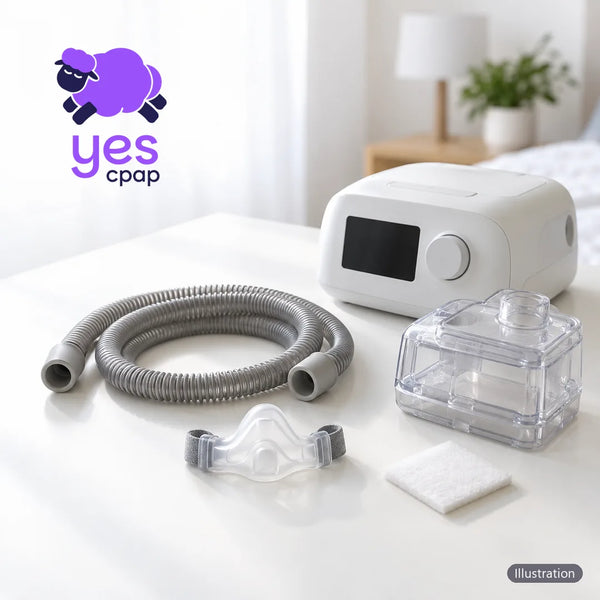
CPAP (Continuous Positive Airway Pressure) therapy is the primary recommended treatment for moderate-to-severe OSA, per the American Academy of Sleep Medicine (AASM) and the Singapore Consensus Statements on OSA Management (October 2025). A CPAP machine delivers gentle pressurised air through a mask to keep the airway open during sleep. For women in Singapore, there are a few practical considerations worth knowing about before starting.
Mask Fit — Why It Matters and What May Help for Smaller Facial Profiles
CPAP mask comfort and seal are the most important practical factors in consistent therapy use. Many mask designs were originally developed with larger facial profiles in mind. For patients with smaller or flatter noses — a common anatomical feature among many Southeast Asian patients — some mask types may fit more reliably than others. Nasal prong (pillow) masks are examples that may suit some smaller facial profiles; the ResMed P30i and Philips DreamWear Silicone Pillows are among the options in this category. However, mask suitability is highly individual. The right mask for any patient depends on specific facial anatomy, sleeping position, and how they respond to pressure — which is why trying masks while lying down with the machine running is important before committing to one.
Full-face masks — covering both nose and mouth — are necessary for some patients, particularly those who breathe predominantly through their mouth during sleep or who have significant nasal obstruction. Nasal prong masks are not suitable for patients missing their upper front teeth. Jo Ng, RPSGT, recommends trialling different mask types with the machine on before purchase. [RPSGT clinical recommendation — YesCPAP; individual fit always varies] For CPAP equipment and mask options available at YesCPAP, check our product range for current availability.
CPAP Adherence in Singapore — What the Published Data Shows
CPAP adherence data from Singapore is limited but instructive. A study at Changi General Hospital (CGH) found that 34.8% of newly diagnosed OSA patients chose to begin CPAP therapy. Of those who started, 50.7% continued past the initial trial, and 78.5% of continuing users were adherent at one year — per Tan B et al. (American Journal of Otolaryngology, 2018, 39(5):501–506), cited in the SingHealth article. This data does not separate results by sex.
Given that women with OSA face a higher risk of depression, this represents a compounding challenge. Addressing mood alongside CPAP therapy — rather than sequentially — may improve adherence outcomes in affected patients.
BiPAP therapy — a variation that reduces pressure when you breathe out — may offer a more comfortable experience for patients who find standard CPAP exhalation pressure difficult to tolerate. Jo Ng finds many patients more comfortable on BiPAP than on Auto CPAP for the breathing-out phase; however, this is based on practice observation and individual responses vary significantly. [Clinical observation — YesCPAP; not a controlled clinical comparison] For current BiPAP and CPAP equipment options, check our product range.
Practical Considerations for Singapore Women Using CPAP ★
Some Singapore women face practical factors that generic CPAP guidance does not address. These include sleeping in shared rooms with children or elderly family members, concerns about the sound or appearance of CPAP equipment, and caregiving schedules that affect sleep timing. These are real factors that can affect consistent CPAP use. In practice, some female patients may find these challenges affect their ability to maintain therapy in the early weeks. [Based on practice observation — YesCPAP patient intake, de-identified; not a quantified study]
Options that may help include:
- Nasal prong masks with quieter exhalation port designs, which produce less noise than full-face masks in many cases
- BiPAP therapy, which some patients find easier to breathe against — particularly on exhalation
- Mouth tape, which can reduce mouth leaks for patients on nasal masks without needing a full-face mask
- Positional support to encourage side sleeping, which reduces event frequency in positional OSA cases
Mask comfort, pressure settings, and device choice all affect long-term use. If standard CPAP is not working for you, a reassessment with a qualified sleep technologist or sleep physician is appropriate before discontinuing therapy.
Singapore's 2026 MOH CPAP Subsidy — Eligibility and Access ★
Singapore's Agency for Care Effectiveness (ACE) published updated guidance on PAP therapy for OSA in March 2026. This guidance has direct implications for eligible patients accessing CPAP treatment through the public healthcare system.
What the March 2026 ACE Guidance Says
In March 2026, Singapore's Agency for Care Effectiveness (ACE) published technology guidance recommending a one-time subsidy for eligible CPAP or APAP devices for adults with moderate-to-severe OSA. To be considered eligible, patients must:
- Have a formal diagnosis of moderate-to-severe OSA from a specialist trained in sleep medicine
- Receive assessment by a credentialled specialist under institutional clinical privileging criteria
The subsidy applies only to listed devices as specified in the ACE guidance, and is a one-time benefit. It does not automatically cover all CPAP or APAP machines on the market. Patients should confirm their specific device eligibility and current subsidy terms with their treating hospital or sleep specialist before making any purchase decisions.
How to Access the Subsidy — The Public Hospital Pathway
- Visit a GP or polyclinic. Request a referral to a restructured hospital sleep centre as a subsidised patient.
- Attend a sleep study at the hospital. The subsidised benchmark cost is around SGD 170, per MOH DRG E63Z data. Your actual bill may differ — confirm with the hospital.
- Receive a formal diagnosis. A credentialled sleep medicine specialist reviews your results and confirms the severity classification.
- Complete a one-month CPAP trial. Use the device at least four hours per night on 70% or more of nights. Most machines record this data automatically.
- Return for specialist review. The specialist confirms adherence and submits the subsidy application through the hospital on your behalf.
Medisave coverage for the sleep study may apply in some cases. Eligibility depends on your individual situation and current CPF policy. Do not assume coverage — check directly with CPF Singapore or your hospital's medical social worker before your appointment.
Night-Shift Workers and Caregivers — An Additional Consideration ★
Women in shift-work roles — nurses, hospital staff, F&B, and hospitality workers — face additional factors that can make sleep apnoea harder to identify and manage.
Why Shift Work May Complicate Sleep Apnoea Recognition
Shift work disrupts the body's circadian rhythm — the internal system that regulates sleep timing, hormone levels, and muscle tone during sleep. There is published evidence linking circadian disruption to increased sleep apnoea risk and symptom severity in the general sleep medicine literature. For women working irregular hours, existing fatigue from disrupted sleep timing may overlap with — and obscure — additional fatigue caused by undiagnosed sleep apnoea. As a result, shift-working women may be less likely to identify their fatigue as clinically significant and less likely to seek a sleep study.
No Singapore-specific prevalence data on sleep apnoea among female shift workers exists in peer-reviewed literature at the time of writing. Jo Ng, RPSGT, recommends that Singapore women in shift-work roles with persistent unexplained fatigue, concentration difficulties, or mood changes discuss OSA screening with their GP — regardless of whether loud snoring is present. [RPSGT clinical recommendation — YesCPAP; individual assessment required]
Organising a Sleep Study Around an Irregular Schedule
Both in-lab and home sleep studies can be arranged around non-standard schedules with some planning. For an in-lab study, scheduling on a rest day that follows a run of work shifts allows the body to accumulate natural sleep pressure beforehand. Inform the sleep technologist of your work schedule before the study begins, so the data is interpreted in the correct context. For a home sleep test, apply the sensors at your normal sleep time in your own bed. If the sleep centre cannot accommodate your schedule, ask the department coordinator directly — Singapore restructured hospitals are generally equipped to support healthcare workers with non-standard sleep timing. The most appropriate study type for your situation should be determined by your doctor or sleep specialist.
Frequently Asked Questions — Sleep Apnoea in Women Singapore
Can women have sleep apnoea without snoring?
Yes. SingHealth Duke-NUS Sleep Centre confirms that women with sleep apnoea more commonly report insomnia, restless legs, depression, and morning headaches rather than loud snoring. The absence of snoring does not rule out OSA. If you feel consistently unrefreshed after sleep, wake frequently, or have persistent morning headaches, a sleep study referral is worth discussing with your GP.
Does menopause cause sleep apnoea?
Menopause does not directly cause sleep apnoea, but research suggests it may increase risk. Progesterone — which declines during perimenopause — is thought to help maintain upper airway muscle tone during sleep. Its decline may increase the airway's susceptibility to narrowing. Post-menopausal women show higher sleep apnoea rates than pre-menopausal women in population-based studies, per PMC5028797 (2016). If you are in or past perimenopause and have persistent sleep or fatigue issues, ask your GP about a sleep study referral.
Can sleep apnoea cause depression in women?
Research shows a strong association. Women with sleep apnoea are nearly three times more likely to develop depression within one year than women without it, per Chen YH et al. (Journal of Clinical Sleep Medicine, 2013, DOI: 10.5664/jcsm.2652). This data comes from Taiwan's national health records and is the closest verified source available. No Singapore-specific equivalent study exists. CPAP therapy often improves mood outcomes when sleep apnoea is successfully treated. If your depression treatment has not fully resolved symptoms, discuss OSA screening with your doctor.
How much does a sleep study cost in Singapore?
Ministry of Health DRG E63Z benchmarks show the following for polysomnography: subsidised at a restructured hospital (GP or polyclinic referral required) — median SGD 170, range SGD 105 to 222; unsubsidised at a restructured hospital — median SGD 558; private hospital (e.g. Mount Elizabeth Novena) — median SGD 3,718. These are benchmark figures, not guaranteed bills. Your actual cost depends on your subsidy status, ward class, and clinical needs. Always confirm costs directly with the hospital before your appointment.
What is the 2026 MOH CPAP subsidy in Singapore and who qualifies?
Singapore's Agency for Care Effectiveness (ACE) published guidance in March 2026 recommending a one-time subsidy for eligible CPAP or APAP devices for adults with moderate-to-severe OSA. The subsidy applies only to listed devices. Confirm your specific device eligibility and current terms with your treating hospital or sleep specialist before purchasing a machine. Source: ACE-HTA.gov.sg, March 2026.
Which Singapore hospital should I go to for a sleep apnoea diagnosis?
The SingHealth Duke-NUS Sleep Centre operates across SGH, CGH, SKgH, KKH, and TTSH. NUH runs a separate sleep laboratory. Women who prefer a female-focused hospital environment may request a referral specifically to KK Women's and Children's Hospital (KKH) — tel: 6692 2984. All restructured hospital sites qualify for the subsidised rate with a valid GP or polyclinic referral.
I have been treated for depression but I also snore — should I consider a sleep study?
This combination — depression treatment that has not fully resolved your symptoms, alongside snoring — is a reasonable basis for raising OSA screening with your GP. Women with sleep apnoea are nearly three times more likely to develop depression, per Chen YH et al. (JCSM, 2013). A subsidised sleep study at a restructured hospital typically costs around SGD 170, per MOH benchmark data, with a GP or polyclinic referral. Sleep apnoea and depression can coexist and compound each other — treating both together generally produces better outcomes than treating one at a time.
How long does it take to get a sleep apnoea diagnosis in Singapore?
Through the public pathway, non-urgent sleep study appointments at restructured hospitals typically involve a waiting period of several weeks to a few months, depending on the hospital and how your referral is triaged. Private sleep clinics offer faster access at a higher cost. Home sleep testing arranged through a qualified provider may be possible within a shorter timeframe, though a credentialled sleep physician still needs to interpret results and issue a formal diagnosis and, if applicable, a CPAP prescription. Discuss the most appropriate route for your situation with your doctor.
Next Steps — Speaking with a Sleep Specialist in Singapore
Sleep apnoea in women Singapore is a treatable condition. CPAP therapy, when set up correctly and optimised to your specific pressure needs, is effective in reducing breathing pauses, restoring oxygen levels during sleep, and easing the associated health strain over time. If you have questions about your symptoms, the diagnostic pathway, or what CPAP therapy involves in practice, Jo Ng (RPSGT, YesCPAP) is available for consultations in Singapore. Contact YesCPAP to start a conversation about your situation.
Written by: Jo Ng, RPSGT — Registered Polysomnographic Technologist, YesCPAP, Singapore. Jo has been using Auto CPAP and BiPAP therapy personally since 2015 and works alongside patients on CPAP therapy optimisation in Singapore.
Published: May 2026. Last updated: May 2026.
Disclaimer: This article is for general educational purposes only. It does not constitute medical advice, diagnosis, or treatment recommendations. Individual clinical decisions — including choice of sleep study type, CPAP device, and subsidy eligibility — must be made with a qualified sleep medicine specialist. Always consult your doctor before starting or changing any treatment.
This article draws on three types of sources. They are listed separately below to help readers understand the basis for each claim.
Peer-reviewed studies and clinical literature
- Tan A et al. "Prevalence of sleep-disordered breathing in a multiethnic Asian population in Singapore." Respirology. 2016;21(5):943–50. doi:10.1111/resp.12747
- Huang T et al. "Sex differences in the associations of obstructive sleep apnoea with epidemiological factors." European Respiratory Journal. 2018;51(3):1702421. DOI: 10.1183/13993003.02421-2017
- "The gender gap in obstructive sleep apnea." SLEEP, Oxford Academic. 2025. DOI: 10.1093/sleep/zsaf068
- Chen YH et al. "Obstructive Sleep Apnea and the Subsequent Risk of Depressive Disorder: A Population-Based Follow-up Study." Journal of Clinical Sleep Medicine. 2013;9(5):417–423. DOI: 10.5664/jcsm.2652
- "Obstructive Sleep Apnea in Women: Specific Issues and Interventions." PMC. 2016. PMC5028797
- Valipour A et al. "Gender-related differences in symptoms of patients with suspected breathing disorders in sleep." Sleep. 2007;30(3):312–9
- Tan B et al. "Adherence to CPAP in Singaporean patients with OSA." American Journal of Otolaryngology. 2018;39(5):501–506. Cited in SingHealth clinical article
- "Singapore Consensus Statements on the Management of Obstructive Sleep Apnoea." Annals of the Academy of Medicine Singapore. October 2025. DOI: 10.47102/annals-acadmedsg.2025153
Official Singapore guidance and government sources
- Ministry of Health Singapore. DRG E63Z — Sleep Apnoea Bill Benchmarks. moh.gov.sg
- Agency for Care Effectiveness (ACE). Positive Airway Pressure for Moderate-to-Severe OSA. March 2026. ace-hta.gov.sg
- CPF Singapore. Medisave for outpatient treatments. cpf.gov.sg
- SingHealth Duke-NUS Sleep Centre. "Obstructive Sleep Apnoea: All You Need to Know." 2023. singhealth.com.sg
- HealthHub Singapore. Obstructive Sleep Apnoea. healthhub.sg
Practice-based observations
Sections in this article marked "[Based on practice observation — YesCPAP]" or "[RPSGT clinical recommendation — YesCPAP]" reflect Jo Ng's professional clinical experience working with CPAP patients in Singapore. These observations are not derived from controlled studies and should be understood as professional opinion, not clinical evidence. Individual patient experiences vary.
Where this goes next
Nothing on this page is a diagnosis, and it is not meant to stand in for one. If you have not had a sleep study, that is the step that comes before any equipment decision. A machine bought without a confirmed diagnosis and a prescribed pressure is simply a machine set to the wrong number.
If a sleep study has already confirmed obstructive sleep apnoea, the next question is equipment, and that is where we can help. Jo Ng, RPSGT, is a registered polysomnographic technologist: mask fitting, pressure setup, and the first two weeks of therapy. Message Jo on WhatsApp, use the contact page, or see what we stock in the full range.
Sources
- Tan A, Cheung YY, Yin J, et al. Prevalence of sleep-disordered breathing in a multiethnic Asian population in Singapore: a community-based study. Respirology. 2016 Jul;21(5):943–50. Summarised by SingHealth, which states an estimated 30.5% of people in Singapore have moderate-to-severe obstructive sleep apnoea, of which up to 91% are undiagnosed.
- Central Provident Fund Board. Using your MediSave savings — the published list of approved MediSave uses. Medical equipment is not on that list.
Keep reading
How Long Does a CPAP Machine Last? 4 Signs It Is Time
Your CPAP's manual, not an online average, says when to replace it: 10 years for Resvent's iBreeze CPAP models, 5 for the...

CPAP Cost in Singapore: What You Actually Pay For
You have been quoted a number and it is more than you expected. Now you are wondering what else is coming, and...
Home Sleep Test Singapore: What Actually Happens on the Night
Your partner has been telling you for years. You wake up tired no matter how early you go to bed. Somebody finally...