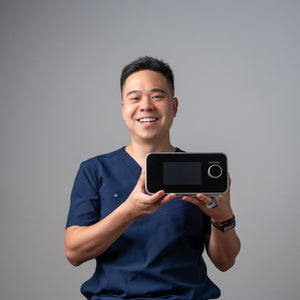
Most CPAP journeys in Singapore don't fail at diagnosis. They fail months later, quietly, when the machine ends up in a cupboard. In fact, one local study found only 13.8% of diagnosed patients still used CPAP after a year (Tan B et al., American Journal of Otolaryngology, 2018). That figure troubles me, because succeeding with CPAP is very learnable. I'm Jo Ng, a Registered Polysomnographic Technologist (RPSGT) in Singapore, and I've used auto CPAP and BiPAP myself since 2015. So this guide shows you how to succeed with CPAP — comfortably, consistently, and for the long run.
Here's the honest truth I've seen again and again. The people who thrive aren't tougher than everyone else. Instead, they simply got three things tuned early: the right mask, comfortable pressure, and enough humidity. Therefore, this guide walks you through each one, plus the habits that make CPAP stick.
Key takeaways
- Most CPAP "failures" are fixable comfort problems, not therapy failures.
- Success means an AHI under 5, low leaks, and 7–8 hours of sleep on therapy.
- Get the mask, the pressure comfort, and the humidity right early.
- Read your own data — but leave pressure changes to your provider.
- Hands-on local support beats a shipped box every time.
Why most people quit CPAP — and why you don't have to
Most people quit CPAP because of fixable discomfort, not because the therapy fails. A leaking mask, the wrong pressure feel, or a dry mouth pushes them away within weeks. However, each of these has a clear solution. Therefore, success depends far less on willpower and far more on tuning your setup properly from the start.
The need is real. In Singapore, 30.5% of adults have moderate-to-severe obstructive sleep apnoea (Tan A et al., Respirology, 2016). Meanwhile, CPAP remains the gold-standard treatment endorsed by the American Academy of Sleep Medicine. Yet, as that 13.8% adherence figure shows, getting the machine is the easy part. Staying with it is where most people stumble.
In my experience, the biggest culprit is the "box-shipping" approach. A supplier hands over a sealed carton, waves goodbye, and never checks in again. As a result, small problems snowball into quitting. Notably, none of those problems are unsolvable — they just need someone to walk beside you. If you'd like that support, you can reach out for a free consultation anytime.
First, get a proper diagnosis
Before starting CPAP, you need a sleep study to confirm sleep apnoea and measure its severity. The study reports your AHI, which counts breathing events per hour. Therefore, it tells your doctor whether you have apnoea, how serious it is, and roughly what pressure you may need. In short, diagnosis always comes first.
In Singapore, you generally have two routes. An in-lab study (Level 1) runs overnight with full sensors and a technologist present. Alternatively, a home sleep test, often a simpler Level III setup, uses fewer sensors in your own bed. Your doctor recommends one based on your health and any heart or lung conditions. For the condition itself — symptoms, causes, and what the readings mean — see my overview of sleep apnoea symptoms and treatment.
Severity follows a simple scale. The American Academy of Sleep Medicine grades AHI as normal under 5, mild from 5 to 15, moderate from 15 to 30, and severe above 30. Notably, "mild" still counts as genuine sleep apnoea. So please don't dismiss it — even mild apnoea can quietly drain your energy and health over the years.
How CPAP actually works (the simple version)
CPAP works by sending a gentle, steady stream of air through a mask to hold your airway open. Consequently, the soft tissues at the back of your throat can't collapse and block your breathing. As a result, the snoring and the breathing pauses stop, and your sleep stops fragmenting through the night.
Think of the air as a soft internal splint. Without it, relaxed throat muscles narrow or seal your airway, and your brain keeps jolting you awake to breathe. With it, those events largely disappear. In fact, well-set therapy often cuts AHI roughly tenfold. Additionally, auto CPAP (APAP) adjusts pressure through the night, while BiPAP splits inhale and exhale pressures for comfort. For a deeper machine comparison, my guide to CPAP machines in Singapore breaks down the options.
What CPAP success actually looks like
CPAP success means your breathing events drop low, your air stays inside the mask, and you wake up genuinely rested. Specifically, aim for an AHI under 5, minimal leaks, and 7 to 8 hours of continuous sleep on therapy. When those line up, daytime energy returns and brain fog lifts. That, ultimately, is the real goal.
Let me unpack the numbers, because they matter. Your machine reports an AHI (Apnoea-Hypopnoea Index), which counts breathing events per hour. Untreated, a person might sit at an AHI of 50. With well-set CPAP, that often falls tenfold, frequently under 5. Additionally, your leak figure should stay low, and your pressure readings should sit comfortably below your ceiling.
Beyond the data, the lived signs tell the clearer story. For example, many of my patients report sharper focus, steadier mood, and fewer morning headaches once therapy settles. Some even notice old issues like dizziness or reflux easing. If your smartwatch first nudged you here, my guide on what to do after an Apple Watch sleep apnoea alert explains how to read these patterns. Encouragingly, once therapy is optimised, most people recover the bulk of their sleep debt within a few nights.
The three real reasons CPAP fails — and the fix for each
CPAP almost always fails for three fixable reasons: a poor mask seal, uncomfortable pressure, and a dry mouth or throat. Tackle them in that order and most discomfort disappears. Importantly, none of these means CPAP "isn't for you". Instead, each is a tuning problem with a known, practical solution.
Reason 1: The mask leaks or feels wrong
A leaking, oversized, or ill-fitting mask wrecks comfort and sleep. As a result, people rip it off at 2am. The fix is to start small and prioritise seal over coverage. I'll cover mask selection in detail below.
Reason 2: The pressure feels uncomfortable
If exhaling feels like a fight, the pressure setup may not suit you. However, the answer is rarely to abandon therapy. Instead, your provider can adjust your settings or move you to a bilevel (BiPAP) machine for gentler exhalation.
Reason 3: Dry mouth, leak, or bloating
Dryness affects a large share of users, and it's very treatable. Humidification, a better seal, and the right mask usually solve it. For a full walkthrough, see my guide on fixing CPAP dry mouth, mouth leak, and bloating.
Getting your mask right
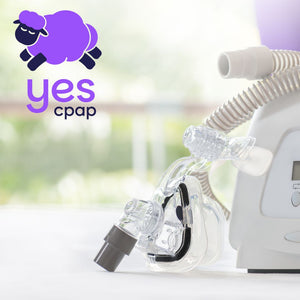
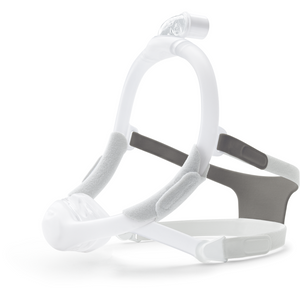
The right CPAP mask balances two things: comfort and a reliable seal. Counterintuitively, smaller masks usually win. Nasal and nasal-pillow masks tend to seal better, feel lighter, and help you fall asleep faster. Therefore, I suggest trying the smallest suitable mask first, and only sizing up if it genuinely doesn't work for you.
Here's a quick way to think about the main mask families:
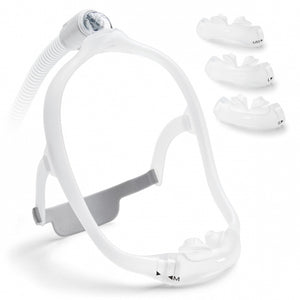
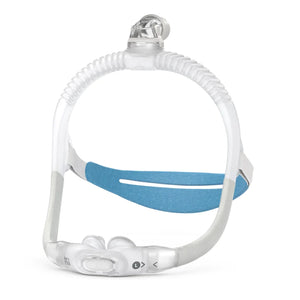
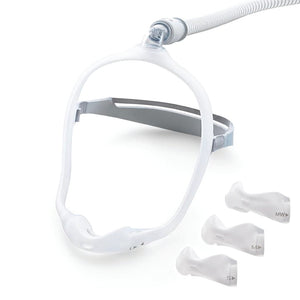
- Nasal-pillow masks — small, light, and minimal on the face; they seal well and suit most sleepers.
- Nasal masks (under-the-nose) — cover the nose only; they often suit longer or larger noses.
- Full-face masks — cover nose and mouth; reserve these for confirmed mouth breathers, blocked noses, or slack-jaw issues.
Mask choice is personal, so let me share what I observe in practice. Based on my work with mostly Asian patients in Singapore, flatter or smaller nose shapes often seal well with nasal-pillow masks like the ResMed P30i. In contrast, larger or longer noses often suit under-the-nose styles. This is a practice-based observation, not a strict rule, so comfort always comes first.
Full-face masks have their place too. However, they tend to leak more and feel bulkier for many users. Generally, I reserve them for people who breathe heavily through the mouth, have a blocked nose, or struggle with a slack jaw. If you're unsure which style fits, you can browse our masks and machines and message us — I'd rather you try a few than guess.
One more tip on fit. You should slide two or three fingers under the headgear strap comfortably. If you can't, it's too tight; if air escapes, it's too loose. Notably, overtightening causes skin soreness without improving the seal, so resist the urge to crank it down.
When exhaling feels hard: CPAP versus BiPAP
If breathing out against the air feels like work, you're not failing — your machine type may simply not suit you. A bilevel (BiPAP) machine delivers lower pressure on exhale and higher on inhale, which many people find gentler. However, switching is a clinical decision, so let your doctor or sleep provider guide it rather than changing course alone.
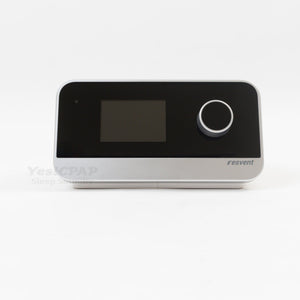
I'll be candid here, because this matters. In my own practice, most patients who struggled on straight CPAP felt noticeably more comfortable on auto BiPAP. That's a practice-based observation across the people I've supported, not a universal guarantee. Still, it explains why I always let people lie down and compare machines before deciding. If a bilevel suits you, our Resvent iBreeze Auto BiPAP is one option worth feeling for yourself.
The lesson is simple. Comfort drives consistency, and consistency drives results. Therefore, never accept "just push through it" as the only answer. Instead, treat persistent exhalation struggle as a signal to involve your provider and explore a gentler setup.
Common side effects — and quick fixes
CPAP side effects are usually mild and very fixable, so don't let them scare you off. Most trace back to airflow, humidity, or mask fit. Therefore, small adjustments solve the majority of complaints. Here are the ones I see most often, with the first thing I'd try for each.
- Dry mouth or throat — usually mouth leak or low humidity. Raise your humidifier and address the leak. My dry mouth and mouth leak guide covers this fully.
- Bloating (aerophagia) — air slipping into the stomach. Elevate the head of the bed and try side-sleeping; your provider can ease the pressure if needed.
- Nasal congestion or a runny nose — dry airflow irritating the nose. A humidifier, or a higher humidity setting, usually helps.
- Skin soreness or marks — often an overtightened mask. Loosen the straps until two or three fingers slide under comfortably.
- Claustrophobia — common with bulky masks. Switch to a smaller nasal or nasal-pillow style instead.
- Equipment noise — check the mask seal, then move the machine a little further from your head.
One reassuring note. Air escaping from the small holes on your mask is completely normal — those are exhalation ports, so never block them. However, if a symptom persists despite these fixes, bring it to your provider rather than pushing through it.
Reading your own data — the safe way
You can absolutely learn to read your CPAP data, and you should. Check three numbers each morning: your leak figure, your AHI, and your P95 or P90 pressure. Together, they show whether your therapy is working. However, pressure itself is a medical prescription — so your job is to recognise the signs and report them, not to change settings yourself.
Here's how I read the basics with patients. A leak chart that climbs gradually usually means mouth leak, often fixed with a chin strap or a better mask. In contrast, a leak that jumps from zero to maximum suggests a mask-seal problem. Meanwhile, breaths that look flattened at the top can hint that more support is needed. In every case, you note it, then bring it to your provider.
Please take this seriously. Your pressure is a prescription, not a dial to fiddle with. Lowering it on your own can quietly let apnoea return, straining your heart and dropping your oxygen without you noticing. Raising it carelessly can trigger a different problem called central sleep apnoea. So recognise the signs, read your numbers, and hand the adjustment decision to your doctor or sleep provider.
For the mechanics of how providers approach this, my practical walkthrough on how CPAP pressure settings are adjusted explains the readings in more depth. Consequently, you'll understand your own reports far better — and have a more productive conversation with whoever manages your therapy.
Building the habit: your first 90 days
CPAP becomes effortless once it becomes routine. The first 90 days build that routine, so design them deliberately. Set up a dedicated bedside space, keep the machine within easy reach, and protect your sleep environment. As a result, the mask stops feeling like equipment and starts feeling like part of going to bed.
Your bedroom matters more than people expect. Specifically, aim for total darkness, a cool steady temperature, low dust, and quiet. Additionally, try to keep work out of bed, since your brain links the bedroom to whatever you do there. For example, checking emails in bed quietly trains restlessness, so I gently steer patients away from it.
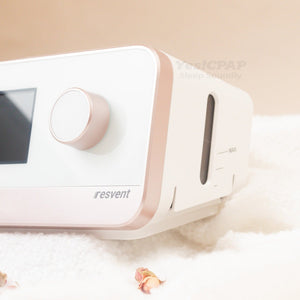
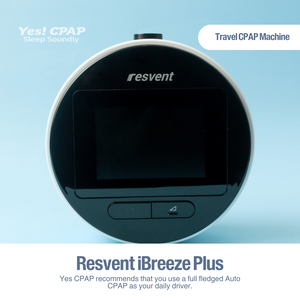
Some nights, sleep won't come, and that's normal early on. If you're still awake after about 20 minutes, pause therapy and leave the bed. Walk around a dimly lit room, sip a little water, then return and try again. This breaks the frustration loop. Notably, a humidifier helps enormously here too — a machine with built-in humidification and heated tubing, like the iBreeze Pro, keeps the air gentle on your throat.
It helps to know what a normal adjustment curve looks like:
- Week 1 — you get used to the mask and airflow; some broken sleep is normal.
- Weeks 2–4 — the mask feels routine, leaks settle, and energy often starts lifting.
- Months 2–3 — therapy feels automatic, and the habit truly locks in.
Progress rarely runs in a straight line, so expect the odd rough night. However, each fix you make compounds over time. Therefore, treat setbacks as tuning opportunities rather than failures.
Give it time, and the payoff arrives. With optimised settings and consistent 7-to-8-hour nights, most people recover the bulk of their sleep debt within a few nights. Ultimately, that early energy boost is what turns CPAP from a chore into a habit you actually want.
Keeping your gear clean and working
Clean gear keeps your therapy comfortable and your seal reliable. A simple routine does the job. Wipe your mask daily, wash the mask and check the filter weekly, and wash the tubing and humidifier tray monthly. Consequently, you avoid build-up, odours, and the micro-leaks that creep in as parts age.
Replacement matters too. In my practice, masks last roughly 6 to 9 months before the silicone ages and starts leaking. Reusable filters often need replacing around the 6-month mark, while a machine itself typically serves well for 3 to 5 years. Notably, yellowing silicone or stubborn micro-leaks are clear signals to change your mask sooner.
Two practical notes for Singapore. First, distilled water prevents mineral build-up in the humidifier, though our clean local tap water works for many users in practice. Second, please avoid buying a used CPAP machine. You rarely know its history, and hygiene or hidden damage simply isn't worth the gamble with your health.
Travelling with your CPAP
You can travel almost anywhere with CPAP, so don't let trips break your routine. Pack the machine, tubing, mask, and power supply, and carry it as hand luggage. Most airlines recognise CPAP as a medical device and won't count it against your cabin weight. As a result, your therapy travels with you, undisrupted.
A few tips smooth the journey. Carry the machine on board rather than checking it in, so a lost bag never costs you a night of therapy. Additionally, most CPAP units accept 100–240 volts, meaning you only need the right plug adapter abroad. For longer comfort, pack a short extension cord and your usual mask spares.
Why local, hands-on support matters in Singapore
A supplier who lies you down with several masks and machines will set you up far better than one who only ships a box. CPAP success is a journey, not a transaction. Therefore, the right partner helps you trial gear, optimise comfort, and troubleshoot problems — long after the sale is done.
This is exactly how I work at YesCPAP. As fellow sleep apnoea sufferers, my team and I focus on helping you succeed in therapy, not just buy hardware. Our business is fully licensed in Singapore, including HSA and GDPMDS registrations, and we're based at Paya Lebar with referral relationships across local medical institutions. The recent Singapore consensus statements on managing OSA stress multidisciplinary, evidence-based care — and hands-on support is a big part of that.
If you're still early in the journey, a few of my other guides may help. For the condition itself, read my overview of sleep apnoea symptoms and treatment. For buying questions, see where to buy a CPAP machine in Singapore. And women, whose symptoms often look different, can start with my guide on sleep apnoea in women.
When you're ready, the next step is simple. You can browse our CPAP machines and masks, or just talk it through with me first. For a free consultation, reach out via our contact page or message us on WhatsApp. There's no pressure — only clarity, and someone in your corner.
Frequently asked questions
Do I need a sleep study before starting CPAP?
Yes. You need a sleep study to confirm sleep apnoea and measure its severity before starting CPAP. It reports your AHI, which guides both diagnosis and pressure. In Singapore, you can do an in-lab study or a home sleep test, depending on your health. Your doctor will recommend the right route for you.
Why do so many people stop using CPAP?
Most people stop because of fixable discomfort, not because CPAP fails. A leaking mask, uncomfortable pressure, or a dry mouth pushes them away within weeks. In Singapore, only about 13.8% of diagnosed patients still used CPAP after a year. However, tuning the mask, comfort, and humidity early dramatically improves the odds of sticking with it.
How long does it take to get used to CPAP?
Many people adapt within one to three weeks, though it varies. Comfort improves fastest when the mask seals well and the pressure feels natural. Meanwhile, building a steady bedtime routine helps your brain accept the mask. With optimised settings and 7 to 8 hours of sleep, most users feel noticeably more rested within a few nights.
Is CPAP or BiPAP more comfortable?
It depends on the person, but many users find BiPAP gentler on exhalation. A bilevel machine lowers pressure when you breathe out, which eases that "fighting the air" feeling. However, switching machine types is a clinical decision. Therefore, ask your doctor or sleep provider to guide the choice rather than changing it on your own.
How do I know if my CPAP is working?
Check three readings each morning: your leak figure, your AHI, and your P95 or P90 pressure. A low AHI, low leaks, and steady pressure suggest good therapy. Beyond the data, watch for real-life signs like better daytime energy and clearer thinking. If the numbers look off, report them to your provider.
Can I adjust my own CPAP pressure?
No — pressure is a medical prescription, so leave changes to your doctor or sleep provider. Adjusting it yourself carries real risk. Lowering pressure can quietly let apnoea return, while raising it carelessly can trigger central apnoeas. Instead, recognise the warning signs, read your nightly data, and report anything unusual to your provider.
Where can I get CPAP support in Singapore?
You can get hands-on CPAP support from a licensed provider who lets you trial masks and machines before committing. YesCPAP, run by RPSGT Jo Ng, is fully HSA and GDPMDS licensed and based at Paya Lebar. For a free consultation, reach out through the contact page or message us on WhatsApp, and we'll help you find a comfortable setup.
How often should I replace my CPAP mask?
In my practice, I replace CPAP masks around every 6 to 9 months. Watch for warning signs sooner, though. Yellowing silicone, persistent micro-leaks, or worn cushions all signal it is time. Ageing masks seal poorly, which quietly erodes your therapy. So treat a fresh mask as part of staying successful.
How much does CPAP cost in Singapore?
Costs vary by machine, mask, and accessories, so it's best not to fixate on a single figure. Rather than quote a price that may change, I'd suggest browsing the current options directly or asking us. You can view machines and masks on our catalogue, or message us for a free consultation and a clear, no-pressure recommendation.